
How to Check Criminal History in Sacramento
Start by naming the record. An incident report, arrest file, neighboring-jail booking, District Court docket, and KSP self-review answer different questions. Sacramento does not have a confirmed local portal that joins them. The right path depends on who responded and what happened after the event.
- Call Sacramento City Hall to ask for the current records custodian and confirm whether the city, sheriff, or KSP created the requested file.
- Request the incident or arrest report from the responding agency with the date, exact location, incident number, and format.
- Call the McLean Circuit Clerk for District or Circuit Court charges, docket entries, orders, and final disposition.
- Ask dispatch or the jailer which neighboring detention center received the person, then obtain the booking from that facility.
- Use KSP self-review, AOC court history, KOOL, or VINE only for each system’s official statewide purpose.
This chain avoids treating a press item, utility contact form, or jail result as a full Sacramento criminal history.
Sacramento Forms Hub Limits
The official Sacramento documents and forms hub publishes ordinances, zoning material, budgets, and an ACH water form. It does not list a police report request, arrest blotter, warrant portal, crime map, or municipal criminal-case database.
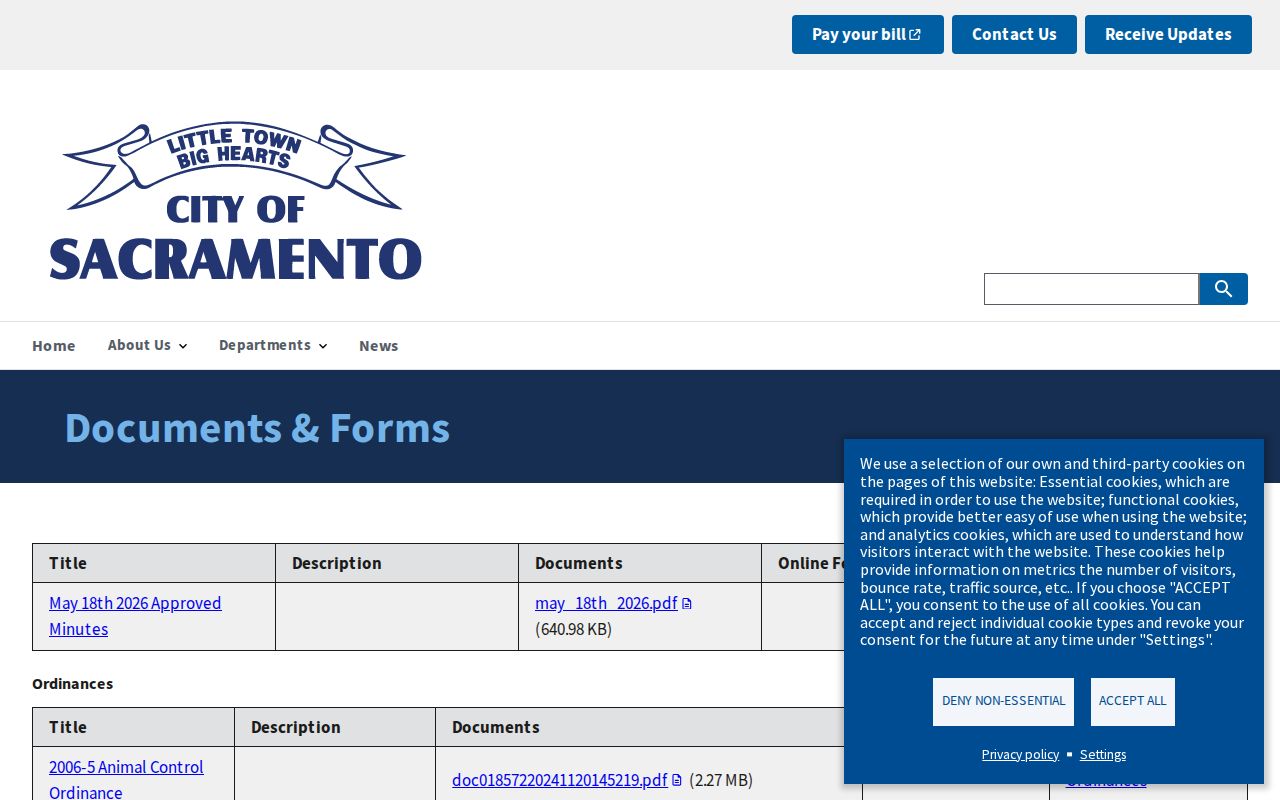
The image clarifies the hub’s scope. It can help locate city administrative sources, but it does not replace the responding agency’s report or the McLean court file. Call City Hall at (270) 736-5114 and ask for the current open-record custodian and submission method instead of forcing a police request into an unrelated form.
The Sacramento Police Department
The current GRADD Sacramento officials listing shows Police Chief as N/A. No active stand-alone Sacramento police records portal, blotter, app, or case search was found. A current event may be handled by the McLean County Sheriff or KSP Post 16, so the agency name on a citation, release, or dispatch response matters.
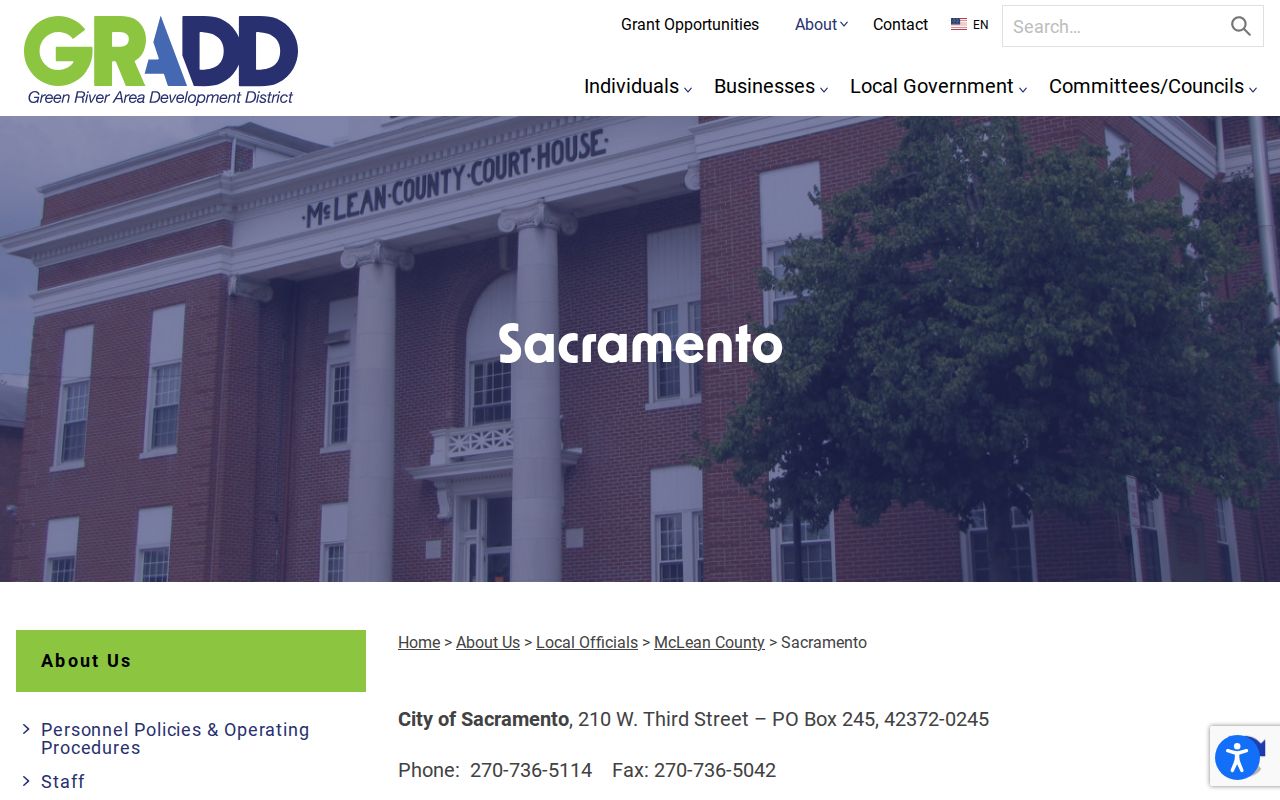
This officials source supports agency-first routing. Sheriff reports go to the sheriff’s custodian at (270) 273-3276. KSP reports go through KSP Open Records. City Hall should receive only a request for a Sacramento record it actually created or retained.
Sacramento Contact Form Is Not Police Access
The prominent city contact form asks for a name, email, telephone number, service address, account number, comments, and an anti-spam field. Those service-address and account-number inputs show that it is oriented toward general city or utility contact. It is not labeled as an open-record request and should not be presented as a criminal-record portal.
| Displayed field | Type | Why it matters |
|---|---|---|
| Name, email, phone | Contact fields | Required general-contact details |
| Address and Address 2 | Service address | Both display as required |
| City, state, ZIP | Address fields | Includes a location dropdown |
| Account Number | Text | Signals an account or utility purpose |
| Question or Comments | Text area | General inquiry, not a named records workflow |
| Leave this field blank | Anti-spam | Should remain blank |
A records request should not place sensitive case details into a form built around a service account. Phone City Hall, obtain the proper custodian and current method, then send a narrow request through that verified channel.
Arrests and Bookings in Sacramento
Sacramento has no confirmed municipal holding facility, and McLean County has no confirmed detention center or public local jail roster. After a Sacramento arrest, call dispatch at (270) 273-3551 or the jailer at (270) 499-8530 to identify the detention center used at that time. A receiving facility in Daviess, Muhlenberg, or Ohio County can hold the booking even when the event and criminal case are in McLean.
Once the facility is known, request the booking or use its official search. Then call the clerk for filed charges. KOOL is a later corrections or supervision layer, not a dependable first-hour local booking tool. Kentucky VINE may provide custody-status alerts after the proper facility or person is identified, but it does not provide the investigative narrative or final judgment.
Note: An empty local search cannot prove that no Sacramento arrest occurred when McLean uses neighboring detention facilities.
Sacramento Criminal Guide Tie Rule
The 2020 Decennial Census reports Sacramento and Island at exactly 429 residents each. Sacramento is therefore not uniquely the third-largest McLean city. Livermore ranks first at 1,230 and Calhoun second at 725, while Sacramento and Island share the next position.
This third city page is an editorial and manifest selection, not a demographic claim. Sacramento was chosen because the county publishes prominent official Battle of Sacramento material and the manifest assigns Sacramento sources to a city profile. Island remains an equally ranked incorporated city. Stating the exact tie preserves the distinction between an official population fact and the project’s three-page selection rule.
The tie also sets a limit on what the label can mean. It identifies Sacramento as one of two cities with the same official count, not as the sole third-place city. If a later project adds a fourth profile, Island’s official history and city contact can support its own route without changing Sacramento’s records workflow.
Sacramento Municipal Court Records
Sacramento has no municipal court. Kentucky’s unified District Court replaced municipal and police courts. Criminal-penalty city ordinance matters go to McLean District Court through the County Attorney. District Court also hears misdemeanors, violations, traffic matters, and preliminary stages of felonies. Circuit Court handles felony prosecutions after the required charging process.
| Court Name | No Sacramento municipal court; use McLean District Court or Circuit Court in Calhoun. |
|---|---|
| Case Types Heard | District Court hears ordinance crimes, misdemeanors, violations, traffic, and felony preliminary matters; Circuit Court hears felonies. |
| Case Lookup Channel | Call or visit the Office of Circuit Court Clerk with a name, approximate year, and case number when known. |
| What the Docket Shows | Filed charges, scheduled events, orders, pleas, disposition, and sentence where applicable. |
| Copies & Fees | Ask the clerk for current plain-copy, certified-copy, and search charges before ordering. |
The clerk is at 210 East Main Street in Calhoun and can be reached at (270) 273-3966 or (270) 273-5055. No Sacramento city portal can replace the signed state-court file.
Battle of Sacramento Record Context
Sacramento’s best-known official historical marker is the Battle of Sacramento on December 28, 1861. County driving-tour material describes about 300 Confederate troops under Nathan Bedford Forrest meeting Union forces led by Major Eli Murray, with control near the Green River as part of the strategic setting. Local material also notes a reenactment as a major tourism event, though current schedules should be verified.
Historic context does not function as a criminal index. A reader researching a nineteenth-century prosecution should begin with the McLean clerk and the Kentucky Department for Libraries and Archives court inventory. Battle sources, a 1904 school image, the 1959 rink, and late-1800s commercial-building records can establish place and time. They cannot prove that a named person was charged or how a court ruled.
Ask the clerk whether a suspected file is indexed under District Court, Circuit Court, an older court name, or a specific term. If it has moved off-site, obtain both the court case reference and the storage locator. This method keeps Sacramento historical research grounded in the official judicial file while using city history only to refine dates and places.
Where Sacramento Records End Up
A Sacramento incident may generate a sheriff or KSP report, a neighboring-county booking, and a McLean court case. Fingerprints and arrest data may enter Kentucky’s centralized repository. The court disposition should later be linked to that arrest cycle. A lag or identifier mismatch can cause one system to update before another.
Record flow: McLean Sheriff or KSP › McLean County Courts › Kentucky State Police Criminal Identification and Records Branch
For the newest Sacramento event, use dispatch, the responding agency, and the receiving facility. For filed charges or an outcome, use the court clerk. For a person checking their own statewide record, use the official KSP subject-review route. A court report and a fingerprint-based repository record remain different products.
Sacramento Crime Data Boundaries
A current stand-alone Sacramento police reporting agency was not confirmed, so official agency tables do not support a custom city violent-crime or property-crime rate. Sheriff incidents reported at county or agency level cannot be assigned to Sacramento city limits without a source that makes that allocation. No city row or a displayed zero is not proof that no event occurred.
For a specific Sacramento record, use the responding agency and court. For trends, describe only the geography and agency that the source measures. This prevents a county sheriff total from being mislabeled as a Sacramento rate and keeps criminal-history claims within the evidence.
Public Access Rules
The Kentucky Open Records Act applies to executive-agency records held by Sacramento City Hall, the sheriff, or KSP. Judicial case files follow Court of Justice access procedures through the Circuit Clerk. Agencies may redact or withhold material protected by statute, such as juvenile records, sealed or expunged cases, grand-jury information, sensitive personal data, protected victim details, or qualifying active-investigation material.
Key Statutes:
Kentucky Open Records Act, KRS 61.870-.884 - defines public-agency records and sets inspection, copy, response, and exemption rules.
KRS 17.150 - addresses dissemination and access for law-enforcement records, including completed matters and separable portions.
KRS 17.185 - authorizes KSP’s subject name-based and fingerprint-supported criminal-history review channels.
A denial by a covered executive agency should cite a specific exemption and explain its application. Attorney General review may be available under KRS 61.880. Court-file access disputes stay in the judicial process.
Sacramento City Hall Records Route
The official Sacramento city site identifies the city as “Little Town, Big Hearts” and supplies the local government starting point.
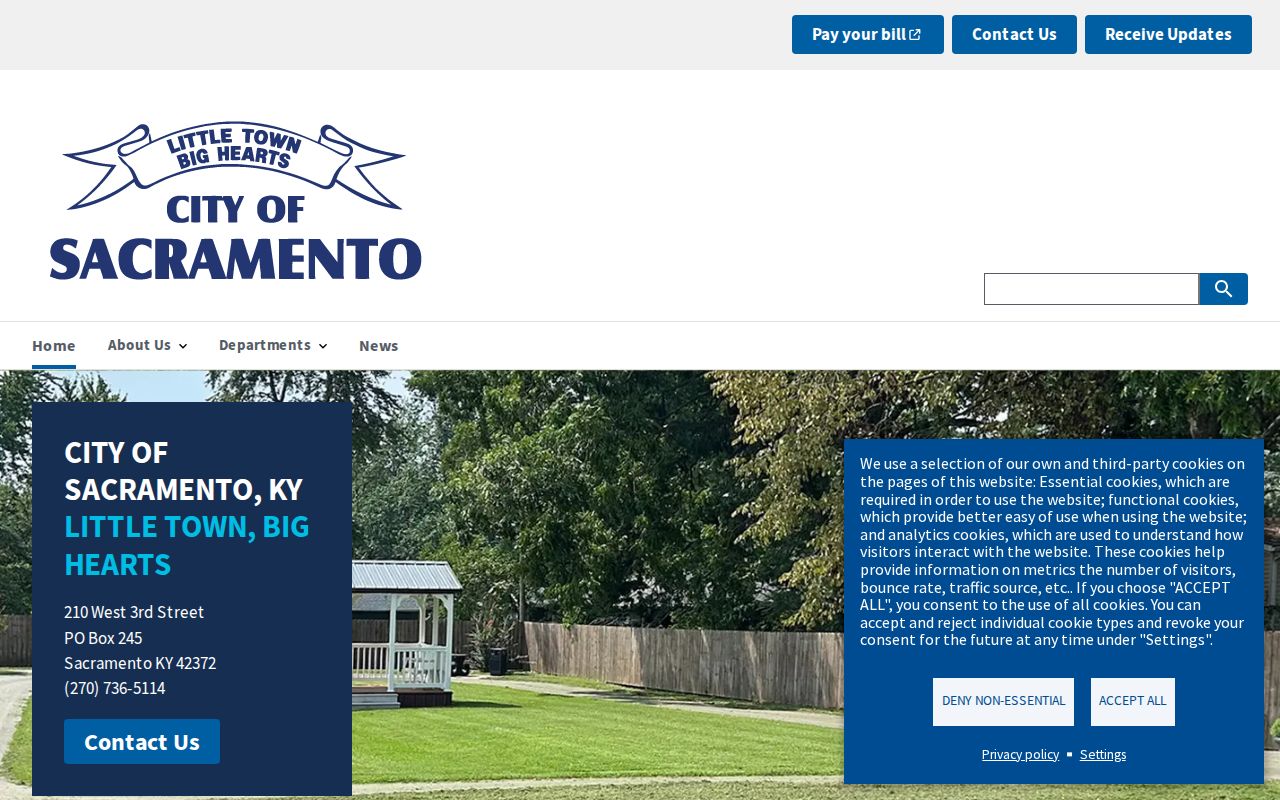
The official site is useful for city contacts and administrative documents. It does not establish a police database. City Hall is at 210 West Third Street, P.O. Box 245, Sacramento, Kentucky 42372. Call (270) 736-5114 and ask for the records custodian, current request method, and copy cost. If the sheriff or KSP created the incident record, redirect the request to that agency rather than asking City Hall to recreate it.
A city-held request should identify the date range, subject, location, document type, and preferred format. Ask whether a current form requires a residency statement and whether the city can provide electronic copies. For a sheriff or KSP response, carry the same details to that agency’s custodian. For the disposition, use the clerk rather than asking city staff to interpret charges.
Sacramento requests for audio, video, photographs, or dispatch entries should narrow the event to a short time span. Ask about retention at once because those formats may not follow the same schedule as a paper report. Keep the Sacramento referral and agency response together so the record trail shows which office held each item and why.
If Sacramento arrest wording differs from the later docket, rely on the filed charges and signed disposition for the court result. Initial allegations can change. A booking establishes custody, while the judgment shows what the McLean court finally decided.